Quick answer
When you specify a fabric for a women's top, four numbers decide whether the garment will behave the way the sample did: GSM (grams per square metre, which sets opacity and drape), composition (the fibre blend, which sets how the fabric recovers and how it takes dye), stretch direction (two-way or four-way, and how much elastane is actually in the yarn), and finishing (the wash, brush or treatment applied after knitting or weaving). Get these four right before sampling and a camisole, tank top or knit top will fit, drape and hold colour the way your line sheet promised. Leave any one of them to the sample room to guess, and you will spend the next two rounds correcting fabric rather than correcting fit.
Most fit problems that reach a factory as a "pattern problem" are not pattern problems. They are fabric problems that were not visible until the first sample was sewn — a jersey that reads too sheer under studio light, a rib that recovers slightly differently from the one on the reference garment, a woven that creases where the design assumed a drape.
This guide sets out how we specify fabric at Guangzhou Maodi Clothing Co., Ltd. for women's tops, camisoles, tank tops and knitwear. It is written for designers, product developers and sourcing managers who need to describe a fabric precisely enough that a mill can quote it and a sample room can make it without interpretation.
1. GSM is a range, not a number
GSM — grams per square metre — is the single most quoted fabric figure and the most frequently misused. It is an average, and two fabrics with the same GSM can differ substantially in how they look on a body depending on how the yarn is spun and how tightly the fabric is knitted.
For women's tops, these ranges are the working reference points:
| Fabric type | Typical GSM | What it does on a women's top |
|---|---|---|
| Sheer chiffon / georgette | 50–80 | Drape and layering; needs a lining or a layered construction |
| Light jersey (single knit) | 110–150 | Camisoles and tank tops; moves with the body, can read sheer in pale colours |
| Mid-weight jersey | 150–190 | The default for T-shirts and everyday tank tops |
| Heavy jersey / interlock | 190–260 | Structure without lining; holds a clean neckline |
| Rib knit | 180–280 | Stretch and recovery; bodycon tops and fitted vests |
| French terry / fleece | 240–400 | Sweatshirt-style tops and heavier knit sets |
| Woven shirting (poplin, twill) | 100–150 | Shirts and blouses; crispness depends on yarn count, not only GSM |
| Woven satin / charmeuse | 70–120 | Drape and sheen; the surface is unforgiving of poor seams |
The trap is the top row against the second. A 110 GSM jersey in a pale ivory colour is, in practice, a different product from the same 110 GSM jersey in black — the opacity is identical but the perceived cover is not. When a design calls for a light-coloured camisole, the specification should name a target opacity, not only a GSM figure.
2. Composition decides recovery, dye uptake and price
The fibre blend is what governs how the garment behaves after the third wash, which is where most quality complaints actually land.
| Blend | Strengths | Where it disappoints |
|---|---|---|
| 100% cotton | Breathability, hand feel, prints cleanly | Shrinks unless pre-shrunk; loses shape in rib constructions |
| Cotton / elastane (95/5) | Recovery and fit retention in fitted tops | Over-stretching in wear; heat-sensitive in finishing |
| Cotton / modal | Softer drape than cotton alone, good colour depth | Pilling on lower grades; needs care in wash testing |
| Viscose / rayon | Excellent drape and sheen at low weight | Wet strength is low; can distort if handled roughly when wet |
| Polyester / spandex | Dimensional stability, colourfastness, cost | Hand feel can read synthetic; prone to pilling if spun cheaply |
| Nylon / spandex | High stretch and recovery, smooth surface | Cost; can feel cool against skin |
| Bamboo / viscose blends | Soft hand, moisture management story | Variability between lots; test each batch |
One practical rule that saves sample rounds: specify the blend as a tolerance band, not as a single figure. A "95/5 cotton/elastane" label is a nominal target; mills quote and deliver within a small range. If a design depends on exactly five percent elastane for its recovery, state an acceptable range and the test that verifies it — otherwise a compliant lot can still fail the garment.
3. Stretch direction and the built-in bra question
For camisoles, tank tops and any fitted sleeveless top, stretch direction is a design decision with structural consequences.
- Two-way stretch stretches across the width only. It is the standard for most single-knit jersey tops and is usually sufficient for a straight or relaxed silhouette.
- Four-way stretch stretches both across and along the length. It is what allows a bodycon top or a fitted vest to be pulled on without a closure, and it is generally required when the garment has to hold a shape close to the body.
- Rib direction matters as much as the percentage. A 2×2 rib and a 1×1 rib built from the same yarn recover differently. If the reference garment has a specific rib, the rib structure belongs in the specification alongside the composition.
Built-in bra tops add a second layer of specification, because the garment is now doing two jobs. Three things need to be agreed before sampling:
| Decision | Options | Consequence |
|---|---|---|
| Support method | Moulded cup, sewn-in foam, elastic shelf band | Determines the construction, the wash behaviour and the price |
| Removability | Fixed pads or removable inserts | Removable inserts need a pocket and add handling steps |
| Outer fabric interaction | Lined or unlined | An unlined built-in bra top needs a heavier outer fabric to avoid show-through at the cup edge |
The third row is where most built-in bra samples go wrong. A design that pairs a light outer jersey with a built-in support layer will show the cup edge under studio lighting unless the outer fabric is specified with the support in mind — usually by moving up a GSM band or adding a lining panel.
4. Finishing: the step that changes everything downstream
Two garments can be made from identical fabric and behave completely differently because of finishing. For women's tops, four finishing decisions matter most:
- Pre-shrinking or compaction. Applied to cotton and cotton-blend knits to control shrinkage before cutting. Without it, the garment shrinks in the customer's first wash rather than in the mill.
- Washing and softening. A garment-washed or enzyme-washed finish changes hand feel and reduces residual shrinkage, but it also shifts colour slightly — which matters if the customer expects the swatch to match the delivered goods.
- Heat setting. Essential for synthetic blends containing elastane, to stabilise the fabric before cutting.
- Surface treatments. Brushing, peaching or a coating change the hand feel and the way the fabric takes print. A brushed surface and a screen print are not always compatible.
That last point connects fabric to decoration, and it is worth stating plainly: the print or embroidery technique must be chosen against the fabric, not applied to it afterwards. Screen printing needs a surface that will hold ink without flooding; heat transfer needs a fibre that tolerates the press temperature; metallic and puff prints need a substrate stable enough to carry a raised layer without distortion; embroidery needs a fabric that will support stitch density without puckering. On a light or highly elastic knit, some of these combinations simply do not work, and the time to find out is before the sample, not after.
5. A fabric specification sheet that a mill can quote
This is the minimum set of lines we ask for when a customer wants a fabric quoted and sampled accurately. It fits on one page and removes most of the back-and-forth.
| # | Line | Why it matters |
|---|---|---|
| 1 | Fabric name and construction | Single knit, rib, interlock, poplin, satin, chiffon — the base identity |
| 2 | Composition with tolerance band | Recovery, dye uptake and hand feel |
| 3 | GSM with an acceptable range | Opacity, drape and weight |
| 4 | Target opacity where relevant | Prevents sheer surprises in pale colours |
| 5 | Stretch direction and percentage | Whether the garment can be pulled on and will hold shape |
| 6 | Rib structure if applicable | Recovery and appearance on fitted tops |
| 7 | Finishing required | Shrinkage, hand feel and colour after wash |
| 8 | Colour reference and light source | Whether the delivered lot matches the approved swatch |
| 9 | Decoration technique and placement | Compatibility with the substrate |
| 10 | Shrinkage and colourfastness targets | The tests the bulk will be judged against |
Our own process follows the sequence these ten lines imply: design development, then fabric selection, then sample making, then bulk production, then inspection and delivery. Fabric selection sits early for a reason — every later stage inherits its decisions, and a fabric change after sampling resets fit, colour and cost at the same time.
Frequently asked questions
What GSM should I choose for a women's camisole or tank top?
Most camisoles and tank tops sit between 110 and 190 GSM in a single-knit jersey. Below roughly 110 GSM the fabric drapes well but reads sheer in pale colours, so a light-coloured design usually needs either a higher GSM or a lining. Above about 190 GSM the garment gains structure and body but loses the soft drape that suits a camisole. If your design is a fitted vest rather than a camisole, look at rib knits in the 180–280 GSM range instead, since rib delivers recovery as well as weight.
Why did my sample shrink after the first wash?
Almost always because the fabric was not pre-shrunk or compacted before cutting. Cotton and cotton-blend knits need a pre-shrinking or compaction step to stabilise them; without it, the residual shrinkage shows up in the customer's first wash instead of at the mill. Garment washing or enzyme washing also reduces residual shrinkage and is often used for exactly this reason. Specify a shrinkage target against a named test method, and specify the finishing step that achieves it — a shrinkage figure with no finishing method behind it is a wish rather than a specification.
Do I need four-way stretch for a bodycon or fitted top?
Generally yes, if the garment has to be pulled on without a closure and still hold a shape close to the body. Two-way stretch, which stretches across the width only, is usually enough for a straight or relaxed silhouette but can feel restrictive on a fitted top that has to pass over the shoulders. Four-way stretch costs more because of the elastane content and the knitting time, so it should be reserved for silhouettes that actually need it. Whichever you choose, state the stretch percentage and direction, because "stretch jersey" alone does not tell a mill enough to quote or a sample room enough to build.
Does the print technique depend on the fabric?
Yes, and this is one of the most common causes of a failed sample round. Screen printing needs a surface that holds ink without flooding. Heat transfer needs a fibre that tolerates the press temperature without scorching or glazing. Metallic and puff prints need a substrate stable enough to carry a raised layer without distorting it. Embroidery needs a fabric that can support the stitch density without puckering, which rules out some light and highly elastic knits. Choose the fabric first, then confirm which decoration techniques are compatible with it — not the other way round.
What is the difference between a 1x1 and a 2x2 rib if the yarn is the same?
They recover differently and they look different. The rib structure sets how the fabric contracts and springs back, so a 1×1 rib and a 2×2 rib built from identical yarn will not behave the same on a fitted top — one will hold closer to the body and one will read broader. If your reference garment has a specific rib, name the structure in the specification alongside the composition and GSM. Telling a mill only "rib knit, 220 GSM" leaves the structure open, and the sample may come back correct in every figure and wrong on the body.
How do I make sure the delivered fabric matches the swatch I approved?
Two things: name the light source used for colour assessment, and set a colourfastness figure the bulk will be tested against. Colour assessed under daylight and under a warm shop light will differ, so an approval that does not state the light source is ambiguous — and an ambiguous approval cannot be enforced. For fabrics that will be garment washed or enzyme washed, remember that the finishing step itself shifts colour slightly, so the swatch you approve should ideally be the post-finishing state rather than the greige. We keep the approved swatch and the light source on the order record so that the bulk and any repeat order are judged against the same reference.
Send a fabric brief and we will return a specification and sample
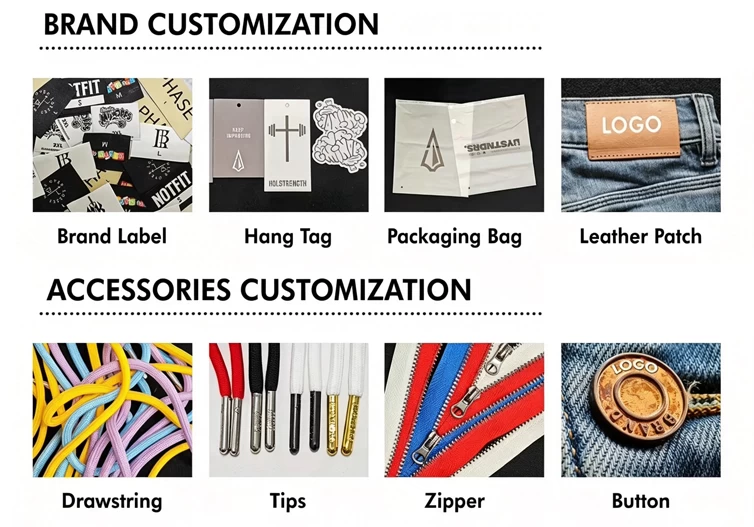
Guangzhou Maodi Clothing Co., Ltd. is a women's apparel manufacturer specialising in camisoles, tank tops, sleeveless tops, built-in bra tops and knitted garments, with more than 17 years of apparel manufacturing experience and a 12,000 m² factory running a monthly output of up to 1,000,000 pieces. We provide OEM and ODM services covering fabric selection, style development, colour customisation, screen printing, heat transfer, metallic and puff printing, embroidery, custom labels, tags and packaging. Send a fabric brief, a reference garment or a swatch, and our team will return a fabric specification, a decoration recommendation and a sample plan before bulk production begins.